Showing posts with label Treatment. Show all posts

Monday, February 5, 2018

Everything You Need To Know About Occupational Therapy: Is It the Best Treatment For Autism?

Occupational therapy is a very useful and successful treatment.

Every day we perform different activities and occupations, small things like walking the dog, gardening or even driving and working. These occupations are part of life. When we’re unable to participate in our daily occupations, due to illness, disabilities, injuries, or environmental or social circumstances, occupational therapy is the best treatment to help us find a solution to those important activities in our daily life. OT also helps prevent illness or any disability and improves the way people participate in communities.

Occupational therapy is a treatment designed to help people reach total control of all areas of their lives. OT takes care of developing and recovering certain aspects that may be missing. The treatment in children is usually very loose and with minimum assignments because their main duty is to learn and play.

How do occupational therapists help?

Occupational therapists have good knowledge of sensory processing, fine/gross motor skills development, emotional and behavioral regulation to support learning and participation. Occupational therapists are highly educated and experienced so they can share a comprehensive and valuable perspective in the treatment of Autism Spectrum Disorder. They evaluate and provide both direct treatment and consultation to families, educators, and caregivers, in physical, psychological, social-emotional health in all environments of a person with Autism. In addition, occupational therapists provide support to families through education, consultation, and assistance.

What do occupational therapists do?
  • Provide appropriate developmental goals relating all important aspects such as motor skills, self-care, attention or social interactions
  • Help patients achieve a total level of independence and well-being, always considering their personal interests, goals, and motivation.
  • Create plans to encourage participation of the person according to his daily routines.
  • Support all kinds of participation and learning process in any of the sensory processing, fine/gross motor skills development, emotional, and behavioral regulation fields.
  • Recommend improvement or modifications of activities and environment to help people with ASD participate in any circumstance.
  • Support the patients and their families through education, consultation, and assistance.
  • Educate and help their patients develop intimate relationships through education about this topic.
  • Contribute to professionals such as educators, social workers, psychologists, psychiatrists, counselors, etc.

Where do occupational therapists work?

Occupational therapy usually takes place in the patient’s home, hospital, care facility, community support service, etc. Occupational therapists work with health care and other professionals, also with organizations, such as government, care providers, and community agencies to develop resources and programs.

Since occupational therapy covers sensory processing, fine/gross motor skills development, emotional and behavioral regulation to support learning and participation, it’s considered a very suitable treatment for Autism.

To know more about other treatments or topics in general about Autism, stay tuned to our blog and our social media.

OT is a great tool to help children and adults with ASD transform their lives and achieve the right level of independence to live to the fullest.


Facebook: Autism Soccer
Instagram: Autism Soccer

Wednesday, January 24, 2018

Benefits of a pet for autistic children, what kind of pet works for them?

Pets can benefit families with autistic children.


There’s no right or wrong when we talk about treatments for Autism Disorder. Nowadays, there are great innovations in studies about autism treatments, and we know that there are some regular effective treatments such as Applied Behavior Analysis (ABA), but besides this one, another new approaches for Autism that might involve a furry friend. It’s been proven that having a pet can actually provide benefits for autistic children.

What benefits can a pet bring to an autistic child?
Interacting with a pet benefits many children with autism; however, parents must consider very carefully which pet works the best. Choose one that will help in the development and improvement of the child’s relationship with his environment.
Here are some reasons why “pet therapy” is a good idea for children with autism:


  1. Pets help autistic children communicate and interact. Having a pet can help the child develop a sense of responsibility which allows them to improve their communication and interaction with others. For example, by training the pet, teaching it how to sit, or fetching a ball, the child will be developing a type of communication. Having a pet can help children with autism to create a unique bond that may become a powerful friendship.
  2. Pets are always there for the autistic child anytime and anywhere. Due to the unique bond that the pet can share with the kid, the pet develops a strong relationship; it is unconditionally available for the child.
  3. Pets can teach the act of responsibility to your autistic child. With simple actions such as feeding or bathing, and playing with the pet, those duties slowly transform the kids into accountable beings and prepare them for more significant responsibilities.
  4. Pets can help the autistic child develop self-dependence and accountability when it comes to caring for their pet. Having a pet comes with some responsibilities due to the fact that they require special attention to fulfill their needs. Children with autism can develop a sense of self-dependence and feel responsible because most of the time they are taking care of the pet’s needs.
  5. Pets help not only the kid but also his family. Having a pet can help parents calm down and feel less stressed when they see their child communicating or interacting, and actively developing positive features thanks to their furry friend.

From a lot of treatments for autistic children, the most effective may be adopting a pet.


What kind of pet works best?
Depending on the atmosphere in which the child grows, there’s a variety of animals to choose as a pet: dogs, cats, guinea pigs, hamsters, birds, horses, and even dolphins. Dogs are particularly the best pets to choose since they tend to be very devoted when showing affection and are constantly looking for attention and company.


When choosing a pet, first of all, parents need to make sure that a pet is the right therapy tool for the child. In addition, there must be a healthy environment for the child and the pet to develop and interact. Always research to confirm that having a pet is a good idea, remember it is not a toy, but a new responsibility.


Facebook: Autism Soccer
Instagram: Autism Soccer

Tuesday, August 22, 2017

Is Transcranial Magnetic Stimulation Potential in Autism Treatment?

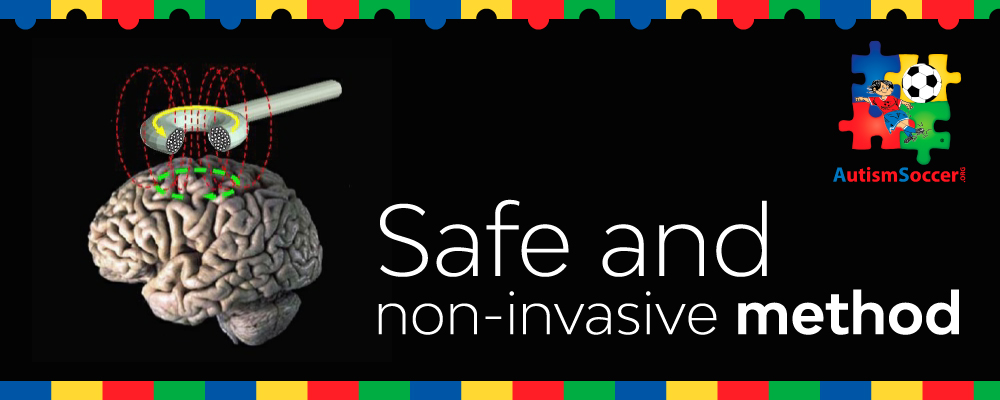
TMS is a safe, non-invasive treatment that stimulates the brain of autistic individuals.

The autism communities have turned their attention towards a newfound treatment, after a book called
Switched On revealed some potential into the treatment of autism.Transcranial magnetic stimulation could potentially be one alternative for autistic individuals.
This stimulation is used to study or treat neurological conditions, and has also helped John Elder Robison (author of the book above) to see things more clearly.
TMS is a noninvasive procedure that stimulates nerve cells with electromagnetic fields. This stimulation triggers a response in the brain, and after several sessions, there’s a potential change to that response in a positive way. These sessions are studied and observed to understand how each brain reacts to the stimuli.
These repetitive sessions are referred to as “repetitive TMS”, and patients who get sessions consistently experience a switch in the way they perceive things. It’s important to clarify these sessions are in no way therapeutically intended.
This is not a recent study. TMS has been studied and researched for more than 20 years to use it as a potential therapy for neurological disorders like Autism or Asperger’s. However, research on TMS as a treatment for the autism spectrum is still in its first steps.
These studies have a long way to go and are still scarce. The numbers of autistic individuals who’ve been part of it round up to 27.
In addition to that, it’s the fact that most studies focused on subgroups of adult men with ASD that did not show any intellectual disability. This leads the results to be inconclusive and potentially erratic.
Don’t get fed up with optimism due to the media coverage. If you’re willing to put your children into trying TMS, the chances are that you could find some answers. There’s still research to be done on the matter.
But there’s a lot of progress, though! Perhaps some answers will come out, and TMS will find its way as a potential therapy for autistic individuals. It’s all speculation, let’s just hope for a positive outcome.
In the meantime, why not choose more friendly alternatives like soccer? Autism Soccer has proven to be a life changer of children who had a hard time with their condition. Reach them and change the life of your kids for good!
Even though this treatment is still in development stage, it seems a promising alternative to help autistic individuals.


Facebook: Autism Soccer
Instagram: Autism Soccer


Autism Glass: A Solution for Gaze Avoidance

Autism glass is a set of wearable glasses that allow children to see their parents through a system and a smartphone application.

There might be a way to help your children learn how to look you in the eyes.
Every growing child faces challenges in its development. In the case of autistic children, the hardships are even more. Numbers show that only in the US there are more than 1 million cases of children diagnosed with autism in their early years. Lack of social interaction generally poses a great difficulty in the early development of these children, making it hard for them to communicate and understand others. Luckily, Autism Glass might be an effective treatment for gaze avoidance.
How do they work?
A researching team at Stanford has identified a potential solution for facial expression recognition training in autistic children. They developed a system using AI and a learning system to automate facial expressions on a screen. The system runs on wearable glasses and can deliver real-time social signals. These glasses have a camera incorporated that is connected to a smartphone.
Children wearing the autism glasses will be able to see and analyze the facial expressions of their parents, peers or friends. Also, the system records the amount and type of eye contact, so it adds an extra benefit for further studies.
It is important to clarify something: this is research conducted at Stanford and is still in process, as it barely kicked off in 2015. But as it proves it could potentially help children, some parents have decided to sign and try these glasses as a part of the study.
Leading members of the project claim that assisting parents, therapists and professionals interested on how to use the device, could be a way to take advantage of these glasses as a tool for continuous learning.

What’s interesting about autism glasses is that children can actually have fun using them. The glasses are made to educate and entertain children while they learn to understand the basics of social behavior from the comfort of their house. Children engage easily as the activities are friendly and easy to use. But the most important part is autism glasses are profitable for their development.
Currently, slots are open for families interested in participating in this investigation. All you have to do is check this website and make sure that your children meet the requirements (they’re quite a few).
There are many alternative treatments out there, all seeking for a definite solution to improve the lives of autistic individuals. One of those is Autism Soccer, a nonprofit organization that aids children in the development of early social skills and offers an environment adapted to them and full of potentials. Sign up your kids to play now or support the cause by donating!
These glasses will improve the understanding of social cues in autistic children and teens.


Facebook: Autism Soccer
Instagram: Autism Soccer

Wednesday, July 26, 2017

Oxytocin and Autism: The Benefits of this Treatment

Oxytocin, often called the "love hormone", has shown some benefits in a subset of people with autism.

In the understanding of ASD, many misconceptions and conditions have been clarified just recently. For example, it was just in 2013 that Autism became a part of a subcategory of conditions that include Asperger’s and PDD-NOS (Pervasive Development Disorder Not Otherwise Specified). This means that not only we’re far from knowing it all, but we're also just starting. Around this discoveries, there’s a recent study that says
oxytocin could be an alternative way to help young children with autism.

Oxytocin is commonly known for being produced in the organism during childbirth (both during and after). However, the called “love hormone” also plays a role in social bonding. So the question now must be: what role it plays in helping children with autism? As a naturally occurring hormone, oxytocin can help them to create bonds and communicate with others.

According to a research in Molecular Psychiatry, a five-week treatment with nasal oxytocin spray can improve emotional, social and behavioral difficulties children with autism have in their early growth. Nonetheless, the results have inconsistencies when compared to long term studies. The long-term use of this hormone has shown to be detrimental to children, as it decreases the brain’s natural production of oxytocin. Also, another research has shown that oxytocin levels are not lower on people with autism, compared to non-autistic.

The next step for researchers is to understand the true effects of oxytocin and how it improves social behavior on the brain circuitry. This study might lead them to understand to what extent autistic children respond to oxytocin and the possible development of oxytocin-based medicines, not for individuals cases but a major spectrum.

It’s important to keep track of all the alternatives, such as this one, as they could lead to a better understanding of autism and how the autistic people's brains function. But remember to be wise and cautious about treatments, and never decide before consulting a specialist. Feel like your children could use some extra help? Then Autism Soccer could be the initiative that’ll change their life. Access their website and see it yourself!

Oxytocin used as a medication for autistic children might help with the treatment of the disorder.


Facebook: Autism Soccer
Instagram: Autism Soccer

Friday, May 19, 2017

Biotinidase Deficiency: Early Diagnosis

This inherited disorder causes the body to be unable to recycle the vitamin biotin.

Today’s article will be a part of a series of topics related to disorders and affections of children in their early stages of growth. Most of these are well known, like stuttering and other disorders that are not so common.
Biotinidase deficiency disorder is an inherited disease that requires treatment and constant care from parents.

Biotinidase is an enzyme that allows the body to recycle the B vitamin biotin. Biotinidase is in charge of extracting the biotin from the food in its free form. This enzyme is also responsible for recycling the biotin from enzymes in the body that use it to function properly. Biotin, also known as vitamin H, is an essential vitamin that helps in the metabolism of proteins, carbohydrates, and proteins.

This deficiency occurs in one out of every 60,000 births. The condition is more common among individuals of European descent, but it also has been reported among Japanese, Saudi Arabian and Turkish, as well.

The problem of biotinidase deficiency (BIOT) is that it disables the reuse and recycling of the vitamin H in the body. There are two types of BIOT: severe “profound biotinidase deficiency” and the partial, milder form of the condition.

The lack of biotin in newborns starts to show months after their birth; these are the early signs of BIOT:
  • Weak muscular tone
  • Skin Rash
  • Hair loss
  • Candidiasis: a fungal infection
  • Seizures

Biotinidase deficiency doesn’t have a cure, but it can be treated. Children with BIOT often require a lifelong treatment of biotin supplements to compensate the lack of it in their bodies. The dosage of biotin will be determined by the doctor and will vary depending on the type of BIOT.

The biotinidase deficiency needs to be spotted and treated early to avoid complications in the children’s growth. If the treatment is constant, your kids will develop normally and be able to live like any other healthy children.
As they have more difficulties in getting their nutrients, they need a lifelong treatment with biotin supplements.


Facebook: Autism Soccer
Instagram: Autism Soccer

Thursday, April 20, 2017

5 Signs of Depression on Your Children


There are phases in the growth of every child that are natural and are easy to overcome: the first scar from playing, that first fish your children used to have and died, crying because you had to move out, among others. All those are common and almost every child goes through them with ease.

Now, depression is something else, entirely. As it turns out, children with autism disorder are very likely to have depression. Children are not in the capacity to deal with depression, no matter the causes.

The problem with depression in autistic children is that the symptoms can hide under the characteristics of autism, making it hard to tell. Follow this guide to know signs that can tell your children are in a state of depression:

Look for the sudden changes: If your children start acting even more withdrawn than normal, or the mood swings are more often than normal, you are facing autistic children with depression.

High functioning autism: children who have a verbal disability are at more risk of depression, as they feel like their companions are able to communicate easily and they’re not, making them feel isolated and lonely.

Pressure and bullying: If you notice your children are particularly off after school or acts weird, there’s a high probability that your children are a target of bullying in the school. The problem with bullying is that your children will feel under a lot of pressure and won’t know what to do, making them feel depressed and impotent.

Change of routine: Autistic children work under repetitive patterns and it’s never a good idea to switch their routines. Messing with their schedules can severely harm them. At first, it’ll look like it doesn’t affect them, but deep down it does.

Maturity: After turning 10 to 12 years old, comes a time of changes in their organism. This process can affect their mood immensely, causing the beginning of teenage depression.

These are not absolute signs for detecting depression: remember all autistic children have a set of characteristics that are very different from one child to another. If you feel that your children are showing off some of those, don’t hesitate and go see a doctor to check on them.

A good way to fighting off depression is by practicing sports in a safe environment, with the team of Autism Soccer. They are a non-profit organization that is in charge of helping your children develop the skills they lack and help them grow. Contact them for more detailed information.
Don't let things stay that way for long, look for your therapist and do something about this situation instantly.


Facebook: Autism Soccer
Instagram: Autism Soccer

Thursday, April 13, 2017

Alternatives to Therapy: Parents Approach

Not all special needs children react the same to treatment. Try with different options and look for the one that fits them.

Individuals with autism need to be constantly looked after and more importantly, they need early intervention and treatment for them to develop the skills autism affects like the lack of communicative skills, the repetitive behavior, and the sleeping disorders. Those are specific characteristics that autism causes on children in their early stages of growth, and most of them can severely affect them (the lack of sleep, for example) in the long term.


Research has been done looking for a definitive answer, but the thing is that autism disorder has a complex way of affecting children that vary from one case to another. Some treatments may work for an individual, but not for another. This is why parents of children with autism search for different alternatives that can adapt to each of their cases; this is the CAM treatment or Complementary and Alternative Medicine.


Remember, some cases might be detrimental for your children, be sure to check with your pediatrician before trying any of these options:


Omega-3 Fatty Acids:
The benefits of Omega-3 fatty acids are well known for both their benefits in children and adults, as it is a healthy fat found in fish oil. Although it hasn’t been supported by scientific evidence, Omega-3 fatty acids are being given to children with developmental disabilities like ASD to help them in the treatment of their condition.


Melatonin:
As stated in the beginning, children with this disorder experience problems related to sleep like interrupted or late-sleeping, which affects the development in early stages of growth, to the extent of causing brain damage. Giving a natural supplement of melatonin greatly helps ASD children as it regulates the sleep-wake cycle. A nightly dose might do the job and help autistic children to have a good sleep.


Diet Alternatives:
In some cases, it’s recommendable to try alternative foods and diets for autism children. This is the most reliable choice for parents who are looking for a non-invasive treatment. Most of these diets are gluten or casein-free since both options tend to cause digestive problems in children. Check your children’s nutritionist before trying this alternative; it wouldn’t be a good idea to take these two out of the diet without proper guidance.


It was said in the beginning: not all those alternatives are made for your children, so consider checking with your doctor before trying any of these options. Also, don’t forget there are alternatives for your children to enjoy, like practicing sports with the people of Autism Soccer. A team made for special needs children, the best environment for growing children.
Do not forget to see an expert on the matter. Alternatives are only a supporting tool, you need a specialist.


Facebook: Autism Soccer
Instagram: Autism Soccer